
USPS Flat Rate Boxes: A Handmade Seller's Practical Guide
USPS Flat Rate Boxes are Priority Mail containers that ship any contents up to 70 lbs to any U.S. address for a fixed price determined by box size, not weight or distance. For handmade sellers, the right box depends on product weight, shipping zone, and how much padding your items need.
Flat rate shipping sounds simple: pack it, pay one price, done. But for handmade sellers, the reality is messier. You're shipping fragile items wrapped in tissue and bubble wrap, irregularly shaped products that don't stack, and orders that weigh very little but still need padding. The box that saves money for a retailer shipping dense goods can quietly cost you more than you expect.
This guide is a decision tool, not a logistics primer. By the end, you'll know which USPS flat rate box fits which type of handmade product, when flat rate beats the alternatives, and when it doesn't, with real numbers to back it up.

What USPS Flat Rate Boxes Actually Are
USPS Priority Mail Flat Rate boxes let you ship any weight up to 70 lbs to any U.S. destination for a fixed price. The price is determined by the box size, not the package weight or how far it travels.
That last part matters. A flat rate box shipped from Portland, Oregon to Miami, Florida costs the same as one shipped across town. For handmade sellers with customers spread across the country, that consistency is genuinely useful.
USPS provides the boxes for free. You can order them at store.usps.com or pick them up at any post office. Priority Mail includes tracking and an expected delivery window of 1 to 3 business days (not guaranteed; only Priority Mail Express includes a money-back delivery guarantee).
Current retail rates (2025) for the most common sizes are:
Box | Dimensions (interior) | Retail Rate | Commercial Rate* |
|---|---|---|---|
Small Flat Rate Box | 8-11/16" x 5-7/16" x 1-3/4" | $10.40 | ~$8.45 |
Padded Flat Rate Envelope | 12-1/2" x 9-1/2" (interior) | $10.40 | ~$8.45 |
Medium Flat Rate Box (Top Loading) | 11" x 8-1/2" x 5-1/2" | $17.10 | ~$14.35 |
Medium Flat Rate Box (Side Loading) | 13-5/8" x 11-7/8" x 3-3/8" | $17.10 | ~$14.35 |
Large Flat Rate Box | 12" x 12" x 5-1/2" | $21.90 | ~$18.85 |
Large Flat Rate Board Game Box | 23-11/16" x 11-3/4" x 3" (interior) | $21.90 | ~$18.85 |
*Commercial rates are available through Etsy, Shopify, Pirateship, and similar platforms. Always buy postage through a commercial source; the difference adds up quickly. Commercial rate estimates sourced from Pirateship rate calculator, July 2025. Rates on Etsy and Shopify Shipping may vary slightly.
Rates verified July 2025 at usps.com. USPS updates rates periodically, so verify current rates at usps.com before quoting customers.
Note: USPS also offers an APO/FPO Large Flat Rate Box for shipments to military addresses. It shares the same 12" x 12" x 5-1/2" interior dimensions and retail price as the standard Large Flat Rate Box and is available to order at usps.com.
The Large Flat Rate Board Game Box is the same price as the standard Large and works well for flat handmade items like art prints, cutting boards, or layered baked goods tins. Verify current pricing at usps.com before publishing.
The Problem Flat Rate Solves (and Doesn't)
Flat rate pricing is designed to reward weight. The heavier your shipment, the more you save relative to a calculated rate. A 10-lb package shipped cross-country in a flat rate box is almost always cheaper than paying the dimensional or weight-based rate.
Handmade products are often the opposite. A bar of soap weighs a few ounces. A pair of earrings weighs almost nothing. A single soy candle might weigh half a pound before packaging. These are light items.
The question isn't whether flat rate exists. It's whether flat rate is the right choice for your specific product, packed the way you actually pack it. That answer changes depending on what you make.
Do you actually know if flat rate saves you money on each product you sell?
Shipping cost is only part of the picture. If you do not know your material costs, batch yields, and per-unit margins, a lower postage rate can still leave you losing money on an order. Batchforja helps handmade sellers track exactly what each product costs to make so shipping decisions are grounded in real numbers.
Create your free account →Which USPS Flat Rate Box Fits Your Handmade Products: A Size Guide
Here is a practical product-to-box guide based on what actually fits and what the shipping math looks like. These are starting points; your specific product dimensions and packaging style may shift things.
Jewelry and Small Accessories
The Small Flat Rate Box at $8.45 (commercial) seems like an obvious choice. But most jewelry is extremely light, and the Small Flat Rate box is quite small. If your jewelry ships in a gift box or rigid mailer with padding, verify it actually fits before committing.
For a single pair of earrings or a simple necklace, a padded flat rate envelope (same price tier) is often a better fit. The padded flat rate envelope measures approximately 12-1/2" x 9-1/2" (interior) and ships at the same commercial rate as the Small Flat Rate Box (~$8.45). It works well for flat jewelry items in gift boxes up to about 3/4" thick. It's flexible, protects flat items well, and doesn't rattle the product around inside a box that's too large.
If you're shipping a jewelry set, a multi-piece order, or a piece with a larger box (like a gift set with a bracelet and earrings), the Small Flat Rate Box is the right call. Just pad it properly. Empty space lets items shift and break clasps.
Candles
Candles are one of the best use cases for flat rate shipping. They're dense enough that flat rate beats calculated rates on cross-country shipments, and they need protection from heat and impact that a rigid box provides.
A single pillar candle or an 8 to 10 oz jar candle typically fits in a Medium Flat Rate Box (Top Loading). Two jar candles, a large pillar, or a candle paired with a second item usually needs the Large Flat Rate Box.
One note: candles need serious padding. Bubble wrap, foam inserts, or crinkle paper filler keeps them from shifting and prevents the container from cracking in transit. That padding adds weight, but you're already paying a flat rate, so it doesn't change your cost.
Handmade Soap
Individual soap bars are light. One bar might weigh 4 to 6 oz. Shipping a single bar in a flat rate box almost never makes financial sense when USPS Ground Advantage is available. USPS Ground Advantage typically runs $4.50 to $10.00+ (commercial) for packages under 1 lb depending on origin ZIP and destination zone. Zone 1 to 4 destinations often fall in the $4.50 to $6.50 range, while Zone 7 to 8 can exceed $8.00. Always verify your exact rate at Pirateship.com before quoting customers.
Flat rate starts making sense for soap when you're shipping a multipack or a gift set. Six bars of soap start to hit the weight range where flat rate is competitive. A soap sampler set with eight bars in a gift box fits well in a Medium Flat Rate Box and ships at a price that justifies the packaging.
Skincare and Body Care Products
Liquid products (serums, facial oils, toners) have two considerations flat rate ignores: they're fragile, and they're subject to USPS hazardous materials guidelines if they contain alcohol above certain concentrations. Most body butters, lotions, and balms are fine.
A single 2-oz face serum is light enough that USPS Ground Advantage is cheaper. A three-product skincare set in a gift box, or a body care bundle with lotion, scrub, and lip balm, is exactly the scenario where the Medium Flat Rate Box earns its keep. The flat dimensions of the side-loading Medium work particularly well for sets arranged side by side.
Ceramics and Pottery
This is where flat rate shines most consistently for handmade sellers. Ceramics are heavy. A single handmade mug can weigh 1 to 2 lbs before packaging depending on clay body and wall thickness; stoneware mugs often run toward the heavier end of that range. Add bubble wrap, foam, and a box, and you're looking at 2 to 3 lbs shipped. For cross-country shipments, that weight pushes calculated rates well above flat rate pricing.
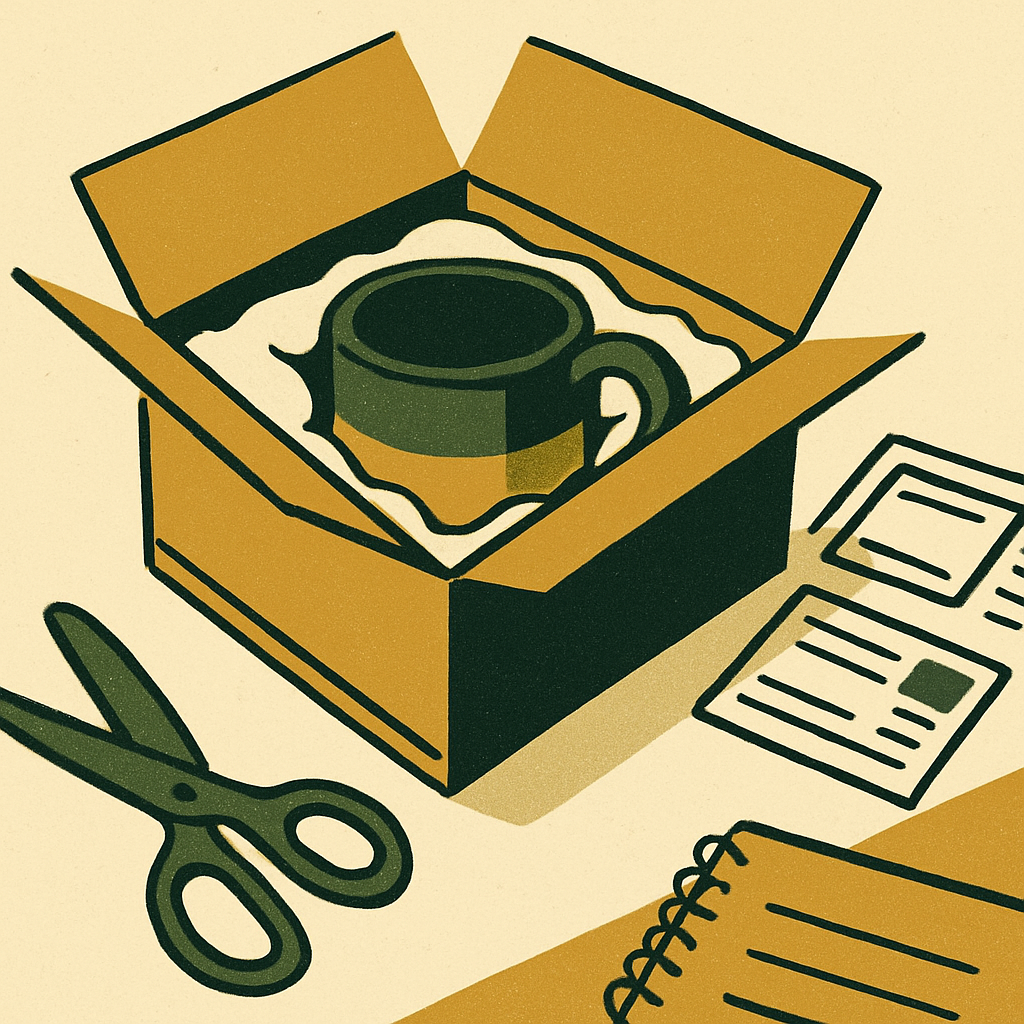
A single mug ships well in a Medium Flat Rate Box (Top Loading) with proper padding, meaning at least 2 inches of cushioning on all sides. A set of two mugs or a bowl typically needs the Large Flat Rate Box. For a large serving bowl or a set of four pieces, you may need to evaluate whether a custom-sized box with a calculated rate is actually more cost-effective, because you can't exceed the flat rate box dimensions no matter what you're paying.
Baked Goods
Flat rate Priority Mail is well-suited for shelf-stable baked goods: cookies, bars, brownies, and dry goods. See the note below before shipping anything perishable or cream-filled.
Note for perishable items: Priority Mail delivery windows are targets, not guaranteed dates. For highly time-sensitive or cream-filled items, Priority Mail Express is the only USPS domestic service with a money-back guarantee (subject to USPS terms and conditions; see usps.com for details). For items that spoil within 2 days, Priority Mail Express or a refrigerated carrier service is a safer choice than flat rate Priority.
For shelf-stable items, flat rate is often the right choice because of its faster average delivery window compared to Ground Advantage. Cookies, brownies, and bars pack well in the Medium Flat Rate Box (Side Loading); the flat, wide shape accommodates layered cookie boxes or a sheet pan-shaped container. Larger items like loaf cakes or gift tins of multiple items typically fit the Large Flat Rate Box.
Crumbling is the enemy. Tissue paper between layers and snug packing prevents items from shifting. Unlike other handmade products, you want the box almost full so nothing moves.
Herbal and Wellness Products
Dried herb blends, tinctures, salves, and wellness kits vary widely in weight and shape. Tinctures and small jars tend to be heavier per unit than dry products. A single 2-oz salve tin is light enough for USPS Ground Advantage. A herbal wellness kit with a salve, a tincture, dried tea blend, and a small candle is a natural Medium Flat Rate order.
One thing to verify before shipping: USPS has restrictions on shipping certain botanicals, plant materials, and supplements across state lines. If you're shipping anything with hemp-derived ingredients or specific regulated herbs, check USPS Publication 52 before assuming flat rate Priority is available to you.
When Flat Rate Loses: The Zone-Based Pricing Alternative
USPS discontinued dedicated Regional Rate boxes in 2023. The underlying zone-based logic still applies, though: for light-to-medium shipments going to nearby zones, calculated Priority Mail or Ground Advantage rates are frequently cheaper than flat rate.
A Real Cost Comparison: Flat Rate vs. Calculated Priority Mail
To find your zone from your origin ZIP, use the USPS Zone Chart lookup at postcalc.usps.com.
Note: Calculated Priority Mail pricing changes with USPS rate updates, so always verify current rates at Pirateship or EasyPost before quoting customers. These figures reflect approximate 2025 commercial rates.
When Calculated Rates Win
Zone-based pricing on lighter packages often beats flat rate for nearby destinations. The math favors calculated rates when:
Your product weighs under 3 to 4 lbs with packaging
A significant portion of your customer base is regionally concentrated
You're shipping to Zones 1 to 4 consistently
The trade-off: calculated rates vary by destination, which makes it harder to quote shipping at checkout. Flat rate's predictability has real operational value if you're setting fixed shipping prices for your Etsy or Shopify store.
The Padding Reality Check for Flat Rate Boxes
Flat rate's "any weight" promise sounds unlimited, but handmade sellers often forget to account for what padding does to the effective value of that flat rate.
Consider a soap gift set: eight bars of soap, 5 oz each, is 40 oz (2.5 lbs) of product. Add tissue paper, crinkle filler, a gift box, and bubble wrap, and your total package weight might reach 3 to 3.5 lbs. At that weight, a calculated Priority Mail rate to a nearby zone could be $10 to $11 commercial. The Medium Flat Rate is $14.35.
Flat rate starts winning when:
The package weighs more than 3 to 4 lbs
The destination is Zone 5 or farther (longer distances)
The product is dense enough that weight accumulates quickly (ceramics, candles, glass jars)
Flat rate starts losing when:
The package weighs less than 3 lbs after padding
You're shipping to nearby zones
The product is naturally light (jewelry, small dried goods, most paper or fabric products)
Running the numbers on your actual product weights and typical shipping zones takes about 20 minutes and can save meaningful money over thousands of shipments per year. Pirateship and EasyPost both have calculators that compare flat rate against calculated rates in real time.
Once you know which rate wins for your top products, the next step is making sure your store's shipping settings reflect that reality.

Flat Rate and Your Etsy or Shopify Shipping Settings
How you set up shipping in your store affects how flat rate works in practice.
On Etsy, you can offer calculated shipping (Etsy pulls live USPS rates based on buyer location and your package dimensions) or fixed-price shipping (you set a flat fee regardless of destination). Flat rate boxes make fixed-price shipping much simpler to manage, because your cost doesn't change based on where the buyer lives.
If you charge a flat $8 for shipping and your actual flat rate cost is $8.45 commercial, you're absorbing a small loss. If you charge $10 flat, you're occasionally pocketing a small margin on shipping. Most sellers choose to charge close to their actual flat rate cost or build it into product pricing entirely and offer free shipping. Getting that product pricing right is its own challenge; our pricing guide for handmade sellers covers how to factor shipping into your margins without undercutting yourself.
On Shopify, USPS calculated rates are available on Basic and above plans as of 2025. You can enable carrier-calculated shipping at checkout to surface specific flat rate box options directly to buyers, giving them accurate pricing without manual rate management. If you primarily use flat rate boxes, adding those specific services to your checkout options means buyers see real costs rather than estimates you've had to guess at in advance. As with Etsy, when a buyer orders multiple items your packaging math changes; two items that each fit in a Medium Flat Rate box separately might both fit in one Large Flat Rate box together, so configuring your Shopify shipping profiles to account for combined orders prevents accidental double-charging on shipments that use a single box.
One thing to watch across both platforms: when a buyer orders multiple items, your packaging math changes. Inventory and order management tools like Batchforja can track per-SKU shipping profiles so your packaging math stays accurate as your product catalog grows.
Ordering, Storing, and Managing Flat Rate Supplies
USPS flat rate boxes are free, but they take up space. If you're running a production-based handmade business, here's a practical approach:
Order in moderate quantities. USPS lets you order up to 25 boxes per size per order online, and reorders are easy. Keeping 2 to 3 weeks of inventory on hand avoids running out mid-production without creating a storage problem.
Store flat. Flat rate boxes ship flat and assemble when you need them. Store them flat in a labeled bin or drawer organized by size. This takes up far less space than assembled boxes and keeps your workspace functional.
Track what you use. Tracking how many flat rate boxes you use per order type helps you understand your true per-unit shipping cost; packaging cost tracking for handmade sellers covers how this fits into your overall cost of goods.
Keep a size reference card. Post a simple card near your packing station listing interior dimensions for each box size. It saves the mental overhead of guessing whether a product will fit before you start packing.
Flat Rate Boxes vs. Your Own Boxes: When to Use Each
Free flat rate boxes are genuinely useful, but they're not always the right answer. Knowing when to use your own custom or plain corrugated boxes matters.
Use flat rate when: the product fits without forcing, the weight is high enough that flat rate beats calculated rates, you're shipping cross-country regularly, and you want shipping cost predictability for your pricing.
Use your own box with calculated rates when: the product doesn't fit flat rate dimensions, the package is light enough that USPS Ground Advantage is cheaper, you're shipping to nearby zones where distance-based pricing helps you, or you want branded packaging that the flat rate box prevents.
Branding is a real consideration that logistics-focused shipping guides rarely acknowledge. A flat rate box is clearly a USPS flat rate box. If you've invested in custom tissue paper, branded tape, and a handwritten note, the unboxing experience starts from the outside. Some makers use flat rate boxes exclusively for efficiency. Others reserve branded outer packaging for their best customers or highest-value orders. Neither is wrong, but it's worth deciding intentionally rather than defaulting to whatever box is available.
Common Flat Rate Box Mistakes Handmade Sellers Make
A few patterns come up repeatedly when makers run into problems with flat rate shipping.
Buying postage at the post office counter. Retail rates are significantly higher than commercial rates available through Etsy, Shopify, or platforms like Pirateship. There's no good reason to pay retail postage rates if you're shipping more than a few packages per month.
Overpacking into the wrong size. Forcing a product into a flat rate box it doesn't fit properly is a false economy. A damaged item in transit costs far more than the difference between box sizes.
Ignoring Ground Advantage for light items. For packages under 1 lb, USPS Ground Advantage is often far cheaper than flat rate. Compare at Pirateship before assuming flat rate wins.
Assuming flat rate is always cheaper cross-country. It usually is for heavier items, but run the numbers. For a 1-lb package going to Zone 8, calculated Priority and flat rate Medium can be within a few dollars of each other depending on exact weight, so always verify at Pirateship before assuming flat rate is the obvious choice.
Not accounting for padding weight when quoting shipping. If you calculate shipping for a product at its bare weight and then add 8 oz of packaging materials, the calculated rate at checkout won't match your actual shipping cost. Build packaging weight into your product shipping profiles.
Losing track of what you shipped, to whom, and at what cost?
Scattered orders across Etsy, Amazon Handmade, and Faire make it easy to miss patterns in your shipping costs and inventory burn. Batchforja pulls your orders together and connects them to your production and material records so you can spot problems before they compound.
Create your free account →Key Takeaways
Flat rate boxes work well for handmade sellers in specific situations, and poorly in others. The decision comes down to product weight, shipping distance, and whether your item actually fits the box dimensions without compromise.
Ceramics, candles, and heavy gift sets are the strongest flat rate use cases. Weight works in your favor.
Jewelry, single soap bars, and lightweight accessories almost always ship cheaper via USPS Ground Advantage.
Calculated Priority Mail and Ground Advantage are frequently overlooked and often beat flat rate for lighter items going to nearby zones.
Commercial postage rates through Etsy, Shopify, or Pirateship are meaningfully lower than post office counter prices. Always use them.
Invest freely in good padding materials once you've confirmed flat rate is the right service; extra weight costs nothing when you're already paying a flat price.
Fixed-price shipping settings in your store are easier to manage when you're using flat rate boxes consistently.
Run the actual numbers for your top products and typical shipping zones. Twenty minutes of math can clarify the right choice for 80% of your shipments.
Shipping isn't glamorous, but it shows up in every order you send. Getting the box right means lower costs, fewer damaged items, and a smoother operation. Start with the products you ship most often, find the right box for each, and build a system you don't have to rethink every Tuesday.